


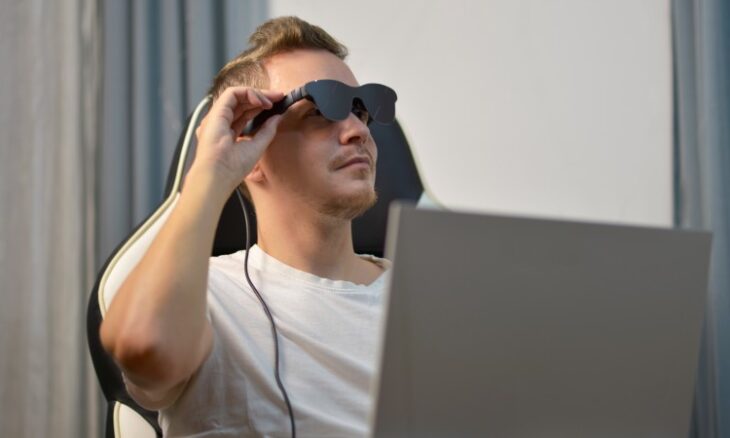
Xreal and Google to Launch Tethered Aura Headset in November
The technology sector will see a new hardware introduction this November when Google and Xreal jointly release the Aura headset. This mixed-reality device requires a physical connection to a dedicated processing unit to function. Consumers can start placing orders for the device immediately. The launch timing gives Xreal and Google an early market presence ahead of Meta’s anticipated spring arrival of competing virtual reality glasses. Using a tethered processor puck, the Aura aims to deliver immersive virtual environments while retaining the physical profile of traditional eyewear.
Consumers who secure early reservations will benefit from temporary price reductions compared with initial projections. The base configuration contains 256GB of internal storage alongside 12GB of operational memory. Xreal has priced this entry-tier version at $1,099 for the current ordering window, a decrease from the previously publicised $1,279. A higher-end hardware tier offers double the storage at 512GB, plus 16GB of memory. This advanced model is currently available for $1,299, reduced from its original $1,500 valuation. These specific promotional discounts are scheduled to expire at the conclusion of the calendar year.
Software operations rely on a custom operating framework titled AndroidXR. This system modifies standard Android architecture to accommodate spatial computing requirements. The software enables the hardware to run standard mobile applications seamlessly. Users can engage with these applications through conventional two-dimensional viewing or immersive three-dimensional spatial modes. The operating system also remains fully compatible with software developed for the Samsung Galaxy XR, a premium spatial computing device launched last year. Navigation within the digital interface is achieved through integrated hand-tracking capabilities. Users who prefer physical input can connect the hardware to external keyboards or standard gaming controllers.
The physical connectivity options extend the hardware’s utility beyond a standalone system. The Aura supports direct physical links to smartphones, laptops, and hardware with USB-C video output ports, mirroring a capability expected in the upcoming Meta VR Glasses. When connected, the external source video appears as an independent floating screen within the headset’s spatial desktop environment. Users can detach the display glasses from the processing puck entirely. In this specific detached mode, the eyewear operates exclusively as a monitor for the external device.
Chi Xu, Xreal’s chief executive officer, has led the firm’s spatial computing initiatives for an extended period. His enterprise previously introduced the nReal Light augmented reality hardware in 2019. The upcoming Aura launch represents the realisation of his long-term hardware development ambitions. Xu stated he envisions the tethered device serving as a viable alternative to traditional laptop and tablet computers. This architectural approach differs from the untethered, wireless smart glasses competitors are pursuing. Integrating artificial intelligence processing via the Gemini platform is expected to unlock new use cases. Xu said this lightweight hardware approach could prompt a major pivot across the broader technology industry.
The visual hardware relies on microOLED display technology to project digital imagery. These built-in screens provide operators with a 70-degree field of view. The projection system directs the image onto transparent physical lenses rather than opaque panels. These lenses use electrochromic dimming technology to adjust the glass’s opacity based on ambient light. This variable transparency lets users operate the hardware safely outdoors. The Xreal Aura isn’t a fully independent augmented reality device because it relies on the processor puck. Despite this limitation, the hardware is intended to enable outdoor spatial computing and artificial intelligence tasks via Gemini. The Snap Spectacles, due later this year, are targeting similar outdoor operational capabilities.
To support its positioning as a viable replacement for mobile computing, the hardware ecosystem includes portable productivity accessories. The manufacturer offers a specialised folding keyboard designed for transit and remote work. The mandatory processor puck also serves as a physical trackpad for precise cursor control. Together, these features aim to replicate the traditional desktop computing experience in a portable mixed reality environment.


